✉️ [email protected] | 📞 +971-4-2675252


Introduction
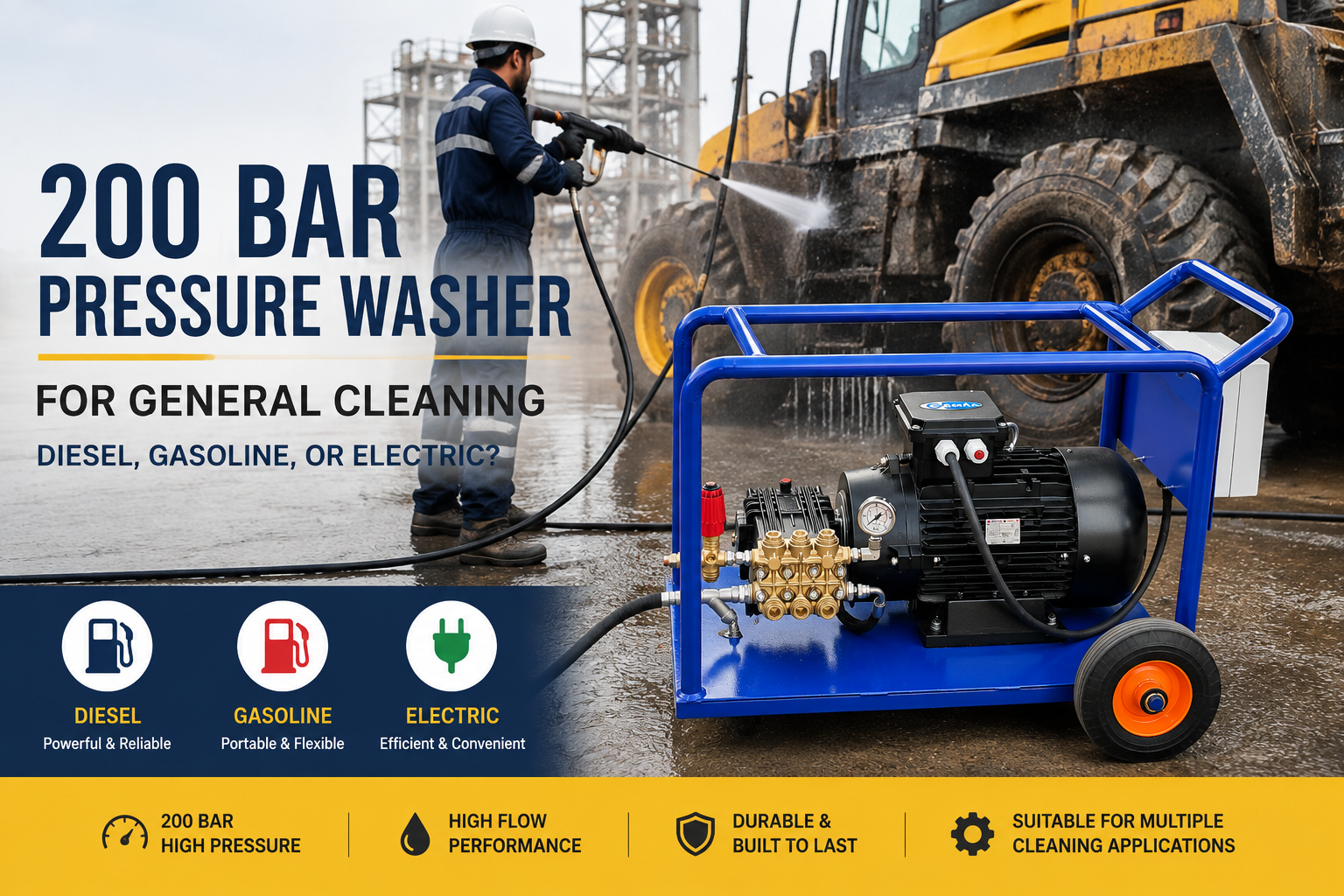
A 200 Bar pressure washer is a practical choice for many general cleaning applications. With the right pump, flow rate, nozzle, hose, and power source, it can remove dirt, mud, grease, oil residue, and other deposits from industrial and commercial surfaces.
However, choosing a pressure washer is not only about pressure. The flow rate, power source, cleaning application, operating environment, and required running time also matter.
Diesel, gasoline, and electric pressure washers can all be suitable for 200 Bar cleaning applications. The right option depends on where and how the equipment will be used.
What Is a 200 Bar Pressure Washer?
A 200 Bar pressure washer is a high-pressure cleaning machine designed to deliver water at a pressure of up to 200 Bar.
Bar is a unit used to measure pressure. A higher pressure can help remove stubborn dirt and deposits from suitable surfaces. However, pressure is only one part of cleaning performance.
The water flow rate is also important. A suitable combination of pressure and flow can help remove dirt more effectively and cover a larger surface area.
For this reason, users should consider both pressure and flow rate when selecting high-pressure cleaning equipment.
Where Can a 200 Bar Pressure Washer Be Used?
A 200 Bar pressure washer can support many general cleaning and maintenance tasks.
Common applications include:
- Industrial equipment cleaning
- Workshop and garage cleaning
- Vehicle and truck washing
- Construction equipment cleaning
- Floor and surface cleaning
- Plant and facility maintenance
- Removal of mud and dirt
- General outdoor cleaning
- Machinery maintenance
- Marine and workshop cleaning
The correct pressure, flow rate, nozzle, and spray pattern should always be selected according to the surface and cleaning requirement.
For specialized industrial cleaning, you can also explore our [High-Pressure Equipment Rental Services] for equipment suitable for short-term projects and maintenance work.
Diesel 200 Bar Pressure Washer
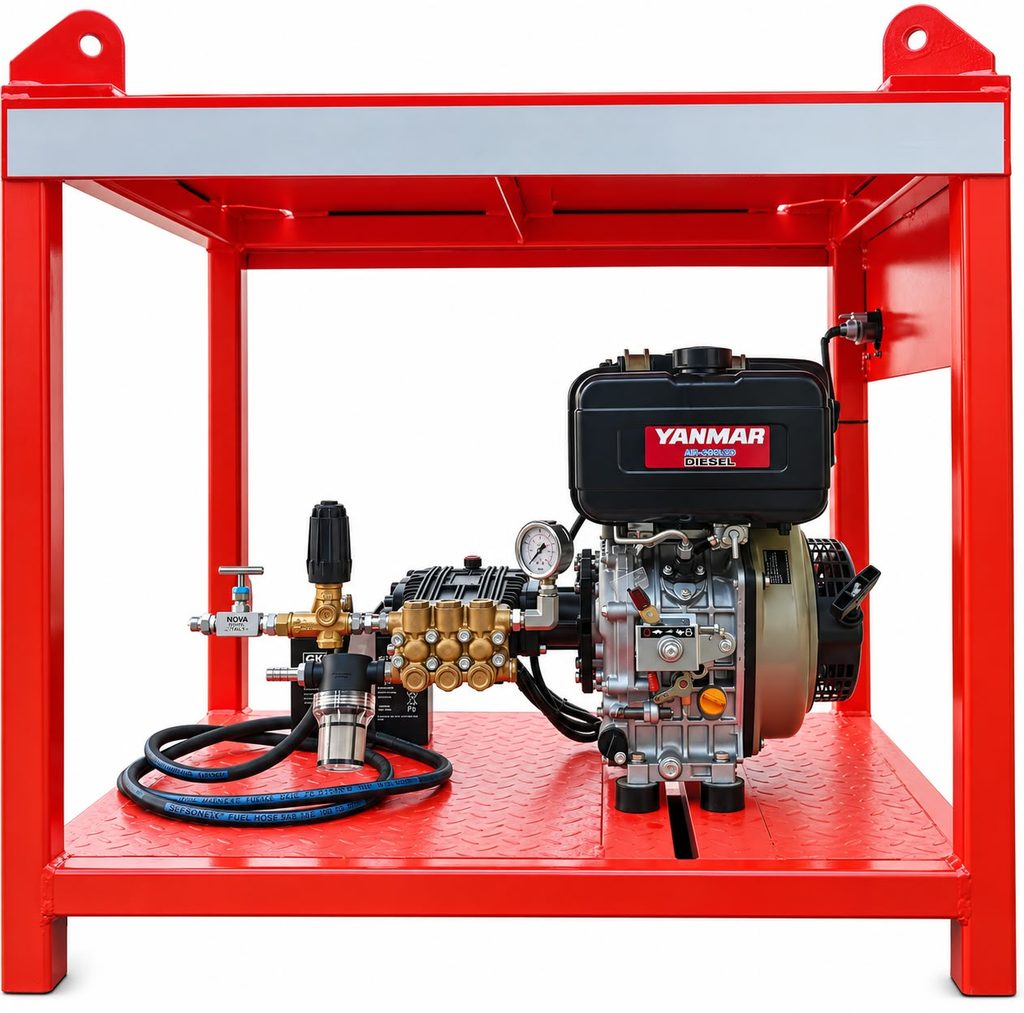
A diesel-driven pressure washer is useful when mobility and independent operation are important. Because the diesel engine provides the required power, the unit does not need a nearby electrical supply. This makes diesel-driven equipment suitable for many outdoor locations, construction sites, industrial facilities, and remote work areas.
Advantages of Diesel Pressure Washers
- Suitable for outdoor applications
- Independent of electrical power
- Useful for extended cleaning work
- Easy to deploy at different locations
- Suitable for demanding industrial environments
A diesel pressure washer can therefore be a practical choice when cleaning equipment needs to move between different work areas.
Gasoline 200 Bar Pressure Washer
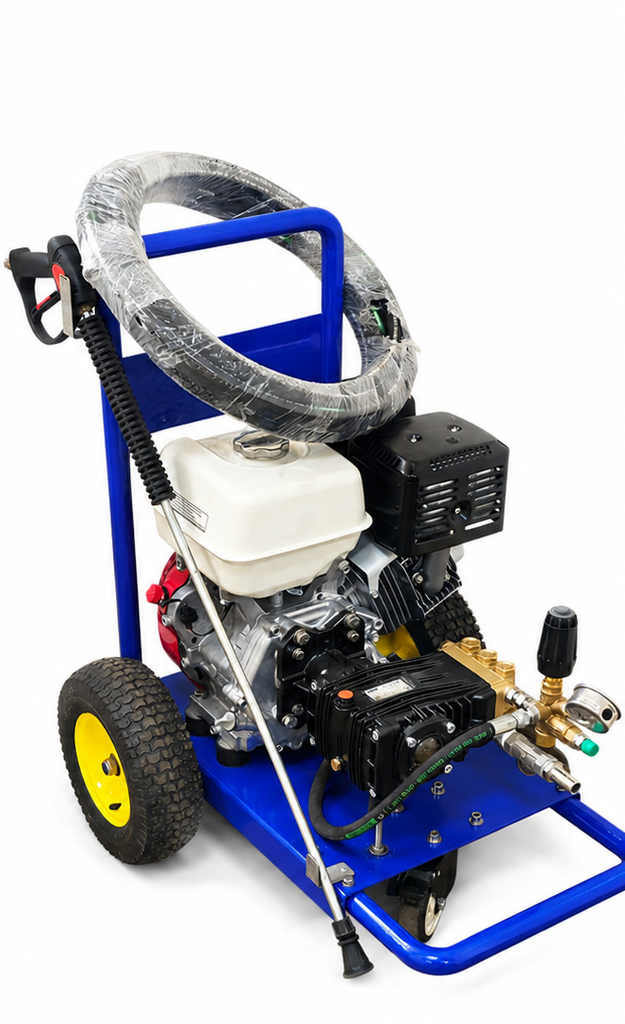
A gasoline-powered 200 Bar pressure washer provides another portable option for general cleaning.
Gasoline units can be useful for maintenance teams and contractors who need to move cleaning equipment between different locations. Like diesel units, they can operate without a direct electrical connection.
Advantages of Gasoline Pressure Washers
- Portable and easy to relocate
- Suitable for outdoor cleaning
- No electrical connection required
- Practical for maintenance and general cleaning
- Useful where electrical power is limited
Gasoline-powered equipment can be a convenient option for mobile cleaning work where portability is important.
Electric 200 Bar Pressure Washer
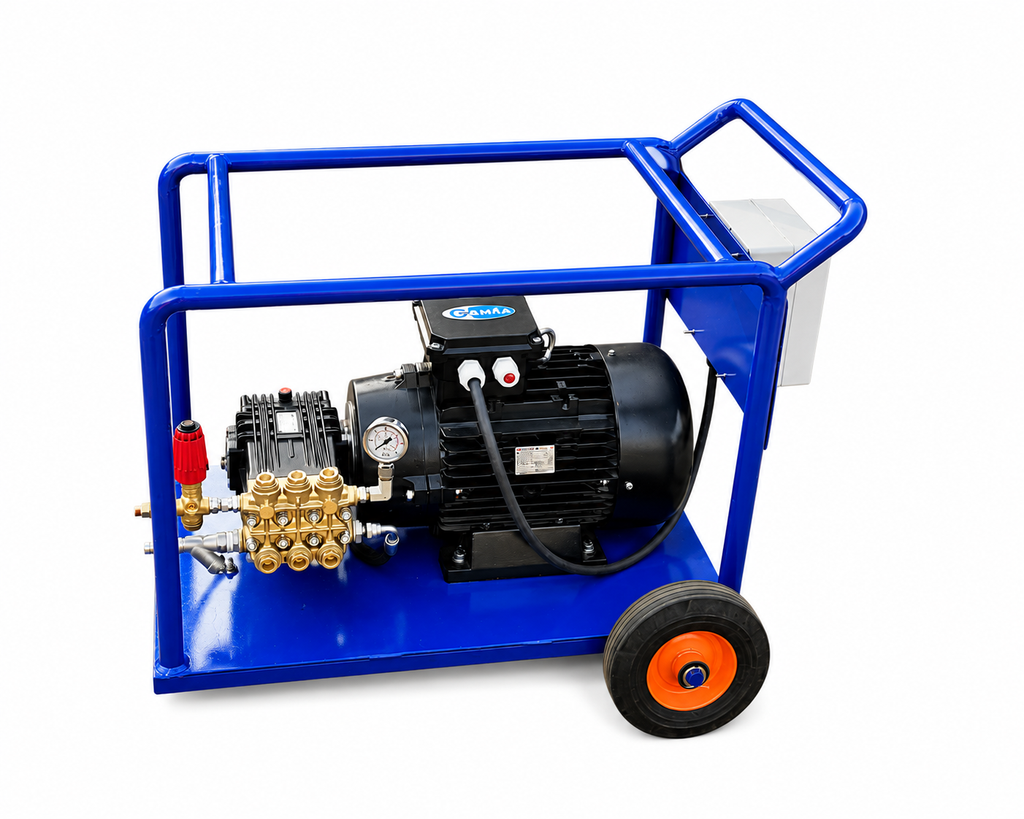
An electric 200 Bar pressure washer is a practical choice when a suitable electrical supply is available.
Electric pressure washers are commonly used in workshops, factories, commercial facilities, service areas, and other locations with reliable electricity.
Advantages of Electric Pressure Washers
- Suitable for locations with electrical power
- Convenient for regular cleaning
- Practical for workshops and facilities
- No engine fuel storage is required
- Suitable for routine maintenance applications
For a fixed cleaning area, an electric pressure washer can provide a convenient solution.
Diesel vs Gasoline vs Electric Pressure Washers
The best power source depends on the working environment and application.
| Power Source | Suitable For | Main Benefit |
|---|---|---|
| Diesel | Industrial and outdoor applications | Independent operation |
| Gasoline | Mobile and outdoor cleaning | Portability |
| Electric | Workshops and facilities | Convenient operation |
If the equipment will frequently move around an outdoor site, a diesel or gasoline unit may be suitable.
If the equipment will remain in a workshop or facility with a reliable electrical supply, an electric unit may be more convenient.
Therefore, consider the location, available power, operating hours, and cleaning requirements before selecting a pressure washer.
What to Consider When Choosing a 200 Bar Pressure Washer
Selecting the right pressure washer requires more than checking the pressure rating.
1. Flow Rate
Flow rate determines how much water the machine delivers. A suitable combination of pressure and flow can improve cleaning performance.
2. Power Source
Choose diesel, gasoline, or electric power based on the location and available utilities.
3. Pump Type
The pump is one of the most important components of a pressure washer. Pump selection should match the required pressure, flow, operating hours, and application.
4. Hose and Nozzle
The hose, gun, fittings, and nozzle should be suitable for the operating pressure. Different nozzles can provide different spray patterns for different cleaning tasks.
5. Operating Environment
Consider whether the equipment will be used indoors, outdoors, in a workshop, at a construction site, or in an industrial facility.
You can also read our guide on [How to Choose the Right High-Pressure Pump for Your Application] to understand the main factors involved in high-pressure pump selection.
Safety When Using a 200 Bar Pressure Washer
High-pressure water can cause serious injury if the equipment is used incorrectly. Operators should always follow the manufacturer’s instructions and use appropriate personal protective equipment.
Before starting work, inspect the pump, hose, fittings, gun, and connections. Do not point the high-pressure spray at people or animals.
Operators should also avoid directing high-pressure water toward electrical equipment or surfaces that could be damaged by high-pressure water.
Most importantly, use the correct pressure and nozzle for the material being cleaned. Higher pressure is not always better.
For additional information about safe high-pressure cleaning practices, users can refer to the [Occupational Safety and Health Administration (OSHA) guidance] on pressure washing and workplace safety.
200 Bar Pressure Washing Solutions
Al Khamis Equipment LLC provides high-pressure equipment solutions for industrial, commercial, and general cleaning applications.
Depending on project requirements, equipment can be selected around different pressure, flow rate, and power source requirements.
Diesel-driven, gasoline-driven, and electric-driven solutions can be considered according to the application and operating environment.
If you require a 200 Bar pressure washer, the equipment should be selected according to the required cleaning performance, operating location, duty cycle, and available power source.
Conclusion
A 200 Bar pressure washer can be a practical solution for general cleaning across industrial, commercial, construction, workshop, and maintenance applications.
Diesel units provide independent operation for many outdoor and industrial applications. Gasoline units offer portability for mobile cleaning work. Electric units can be convenient where a reliable electrical supply is available.
Most importantly, pressure should not be considered on its own. Flow rate, pump type, power source, nozzle, hose, and application all play an important role in selecting the right pressure washing equipment.
By matching the equipment to the actual cleaning requirement, users can achieve effective cleaning while operating the pressure washer safely and efficiently.