✉️ [email protected] | 📞 +971-4-2675252

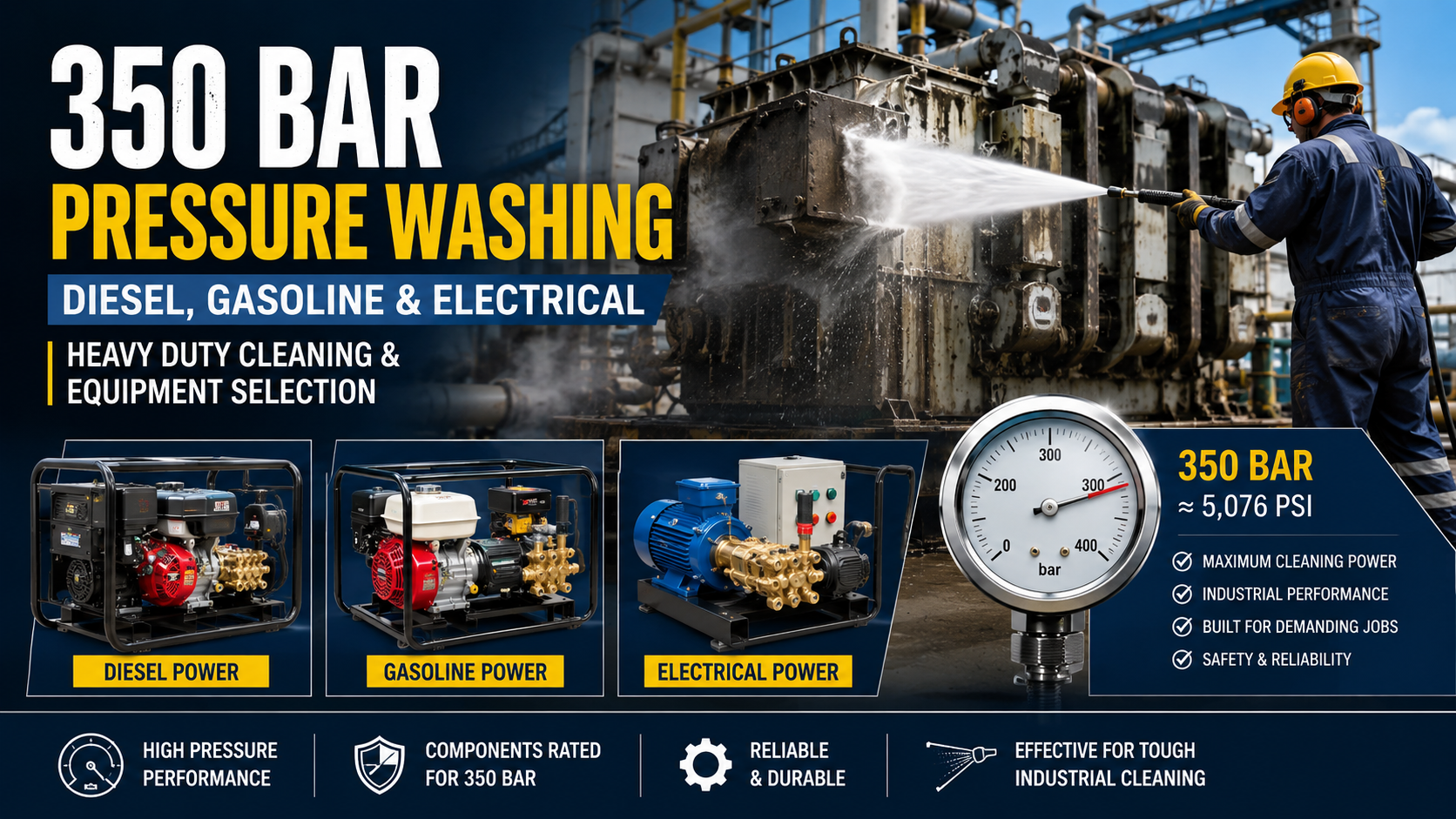

Heavy-duty cleaning often requires more than a standard pressure washer can provide. For demanding industrial jobs, 350 bar pressure washing can deliver the extra cleaning force needed to remove tough dirt, deposits, coatings, grease, and other contaminants.
However, high pressure alone does not guarantee good cleaning results. The pump, engine or motor, hoses, fittings, valves, spray guns, nozzles, and other components must be suitable for the working pressure.
A 350 bar system must be designed and operated as a complete system. Each component should have a suitable pressure rating for the intended application. This helps support safe operation, reliable performance, and consistent cleaning results.
What Is 350 Bar Pressure Washing?
350 bar pressure washing uses a high-pressure pump system that can operate at pressures up to 350 bar, depending on the equipment design and operating conditions. For comparison, 350 bar is approximately 5,076 psi. This pressure level is significantly higher than common commercial pressure washers. As a result, 350 bar equipment is generally suited to demanding cleaning applications where lower-pressure systems may not provide enough cleaning force.
These applications can include:
- Industrial equipment cleaning
- Heavy machinery cleaning
- Pipeline and process equipment cleaning
- Tank and vessel cleaning
- Heat exchanger and tube cleaning
- Marine and ship maintenance
- Concrete and surface cleaning
- Oil and grease removal
- Plant maintenance
- Surface preparation
The correct pressure, however, depends on the job. Therefore, operators should always select equipment based on the required pressure and flow rate rather than pressure alone.
Why Use 350 Bar for Heavy-Duty Cleaning?
Higher pressure can help break down and remove stubborn contamination. For example, industrial equipment can collect hardened dirt, grease, scale, paint residues, and other deposits over time. A 350 bar pressure washing system can provide strong water impact when the pump, nozzle, flow rate, and operating distance are correctly matched. However, more pressure is not always better.
Using excessive pressure on a delicate surface can cause damage. It may remove coatings, mark surfaces, damage seals, or create other problems. Therefore, the cleaning system should be selected according to the material, contamination, and cleaning method.
Pressure and Flow Rate Both Matter
Pressure is only one part of pressure washing performance. Flow rate also plays an important role. Pressure provides cleaning force at the nozzle. Flow rate determines how much water reaches the surface and helps carry loosened dirt away.
For example, a system with high pressure but very low flow may not clean a large area quickly. On the other hand, a system with suitable flow and pressure can provide a better balance between cleaning force and productivity.
When selecting a 350 bar system, consider:mm
- Required pressure
- Required flow rate
- Type of contamination
- Surface material
- Cleaning area
- Nozzle type
- Operating distance
- Available power source
Consequently, the pump should be selected according to the complete cleaning requirement.
Diesel, Gasoline or Electrical Power?
A 350 bar pressure washing system can be powered by different sources. The right choice depends on the working environment and available power.
➡️Diesel-Driven 350 Bar Pressure Washing
Diesel-driven systems are useful for demanding outdoor and industrial applications. They can operate without depending on a fixed electrical supply.
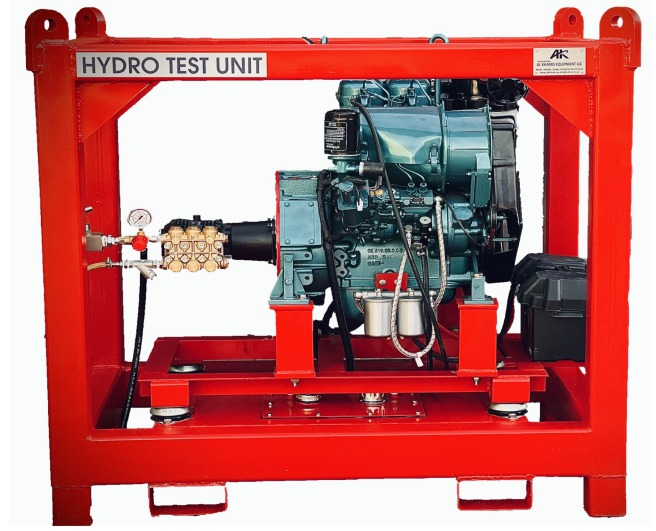
This makes diesel-powered units suitable for:
- Remote work locations
- Construction sites
- Industrial maintenance
- Pipeline work
- Marine applications
- Shutdown projects
- Outdoor cleaning
Diesel engines can also provide the power required for high-pressure pump systems when the pump is correctly matched to the engine.
➡️Gasoline-Driven 350 Bar Pressure Washing
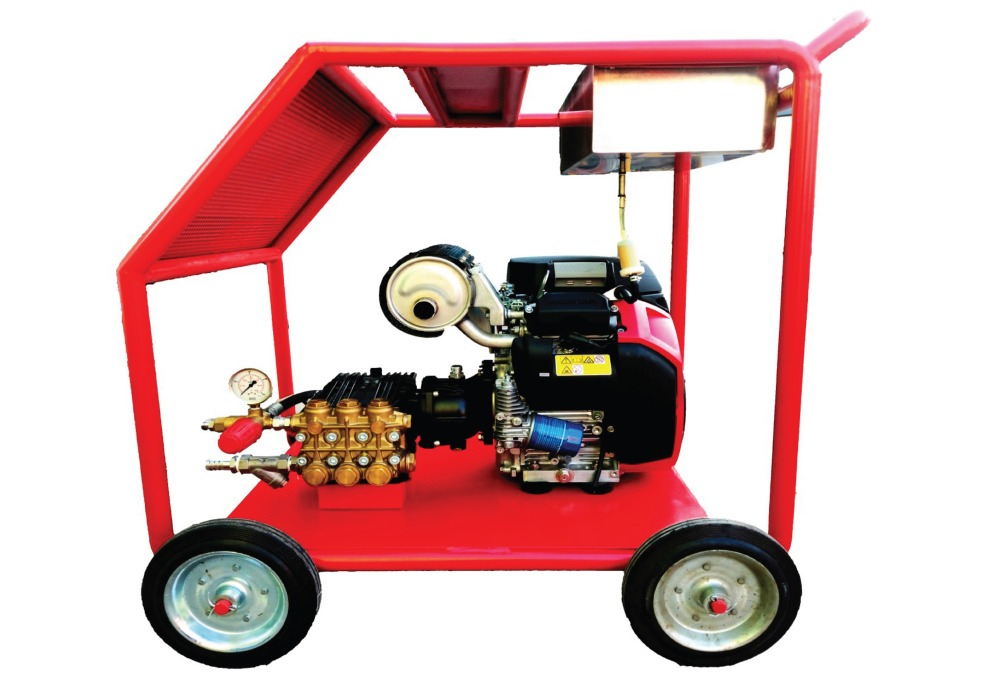
Gasoline engines can provide a practical power source for selected portable pressure washing systems. They can be useful where mobility and easy access to engine fuel are important. However, the engine must be correctly sized for the pump and operating conditions. Before selecting a gasoline-driven system, check the required pump power, operating pressure, flow rate, duty cycle, and site requirements.
➡️Electrical 350 Bar Pressure Washing
Electric-driven systems can be suitable for factories, workshops, plants, and other locations with a suitable electrical supply. Electric systems can offer convenient operation where power is readily available. They can also be suitable for indoor applications when the installation and electrical equipment meet the required safety conditions. However, the motor must be correctly matched to the pump. The electrical supply must also be suitable for the motor’s voltage, phase, current, and power requirements.
Every Component Must Be Rated for 350 Bar
One of the most important considerations in high-pressure cleaning is component pressure rating. A pump operating at 350 bar does not mean that every component in the system can automatically handle 350 bar. The complete system must be checked.
Important components include:
- High-pressure pump
- High-pressure hose
- Spray gun
- Lance
- Nozzles
- Valves
- Fittings
- Manifolds
- Pressure gauges
- Unloader or regulating valves
- Connections and adapters
- Seals and other pressure-containing parts
Each component should have a suitable pressure rating for the intended operating pressure and application. For example, using a hose or fitting that is not rated for the system pressure can create a serious safety risk. Therefore, never select components based only on appearance, size, or connection type. Always check the manufacturer’s specifications and pressure ratings.
Do Not Confuse Maximum Pressure With Working Pressure
High-pressure equipment specifications can include different pressure values. For example, a pump may have a maximum rated pressure and a recommended operating pressure. These values should not be treated as interchangeable. The system should be designed around the actual operating conditions.
When selecting equipment, check:
- Maximum pressure
- Normal working pressure
- Flow rate
- Pump speed
- Power requirement
- Component pressure ratings
- Duty cycle
This information helps ensure that the pump and drive system are properly matched.
Choosing the Right Nozzle for 350 Bar Cleaning
The nozzle controls how water is delivered to the surface. Therefore, nozzle selection is an important part of a 350 bar pressure washing system. Different nozzle types can produce different spray patterns and cleaning effects. A narrow spray pattern can concentrate water on a smaller area. In contrast, a wider spray pattern can cover a larger area.
The correct nozzle depends on:
- Pump pressure
- Pump flow rate
- Surface type
- Cleaning requirement
- Working distance
- Desired coverage
Most importantly, the nozzle must be rated for the intended pressure and flow. Using the wrong nozzle can reduce cleaning performance and may also affect the pressure and operating conditions of the pump.
Working Distance Affects Cleaning Results
The distance between the nozzle and the surface also affects cleaning performance. A nozzle held very close to a surface can produce a more concentrated impact. However, excessive pressure at close range can damage some surfaces.
Moving the nozzle farther away can increase coverage, but it can also reduce the cleaning force reaching the surface. Therefore, operators should follow the equipment manufacturer’s recommendations and adjust the working distance according to the surface and contamination.
What Can 350 Bar Pressure Washing Clean?
A correctly selected 350 bar system can support many heavy-duty cleaning tasks.
➡️Industrial Equipment
Industrial machines can collect grease, dirt, dust, and process residues. High-pressure water can help remove these contaminants during maintenance and shutdown work.
➡️Pipelines and Process Equipment
High-pressure cleaning can be used during pipeline maintenance and preparation activities. The correct equipment depends on the pipeline size, cleaning method, pressure requirement, and flow rate.
➡️Tanks and Vessels
Tanks and vessels may require cleaning before inspection, maintenance, or further processing. The pressure and nozzle selection should match the tank material and contamination.
➡️Marine Equipment
Marine equipment can collect salt deposits, marine growth, dirt, and other contaminants. High-pressure cleaning systems can support vessel and marine equipment maintenance.
➡️Heavy Machinery
Construction and industrial machinery often requires strong cleaning to remove mud, grease, and accumulated dirt. A suitable 350 bar system can provide the cleaning force required for demanding maintenance work.
Safety Is Essential at 350 Bar
350 bar water can create significant force. Therefore, high-pressure cleaning should always be treated as a specialist operation.
Operators should:
- Use suitable personal protective equipment
- Inspect hoses before use
- Check fittings and connections
- Confirm pressure ratings
- Inspect the spray gun and lance
- Keep people away from the spray area
- Never point the spray at people or animals
- Follow the manufacturer’s operating instructions
- Depressurize the system before maintenance
- Replace damaged high-pressure components
In addition, operators should receive appropriate training for the equipment and application.
How to Select a 350 Bar Pressure Washing System
Selecting the right system starts with the cleaning requirement. Consider the following factors:
1. Define the Cleaning Application
First, identify what needs to be cleaned. Industrial equipment, pipelines, tanks, concrete, machinery, and marine equipment may require different setups.
2. Determine the Required Pressure
Next, determine whether 350 bar is appropriate for the surface and contamination. Higher pressure should only be used when the application requires it.
3. Determine the Required Flow Rate
Then, select the flow rate required for the cleaning area and productivity target.
4. Select the Power Source
Choose between diesel, gasoline, and electric power based on the site and operating requirements.
5. Check Every Component
Finally, make sure the pump, hose, gun, valves, fittings, nozzles, gauges, and other pressure-containing components are rated for the intended operating conditions. This final step is especially important for high-pressure systems.
350 Bar Pressure Washing Requires the Right System Design
A 350 bar pressure washing system is more than a high-pressure pump. The pump must work correctly with the engine or electric motor. The nozzle must match the pump output. The hose and fittings must handle the working pressure. The valves and other components must also be suitable for the application.
As a result, equipment selection should focus on the complete system rather than one specification. For demanding industrial cleaning, a properly matched system can provide the pressure, flow, mobility, and reliability required for the job.
Conclusion
350 bar pressure washing can provide powerful cleaning performance for demanding industrial applications. However, pressure alone does not determine the right system. The pump, power source, flow rate, nozzle, hose, fittings, valves, and other components must work together. Most importantly, every pressure-containing component should have a suitable rating for the intended operating pressure.
Whether the system uses a diesel engine, gasoline engine, or electric motor, correct equipment selection is essential. If you need a 350 bar pressure washing system for industrial cleaning, equipment maintenance, surface preparation, or other demanding applications, selecting the pump and complete package according to the actual operating requirements can help achieve reliable and consistent results.