✉️ [email protected] | 📞 +971-4-2675252


Introduction
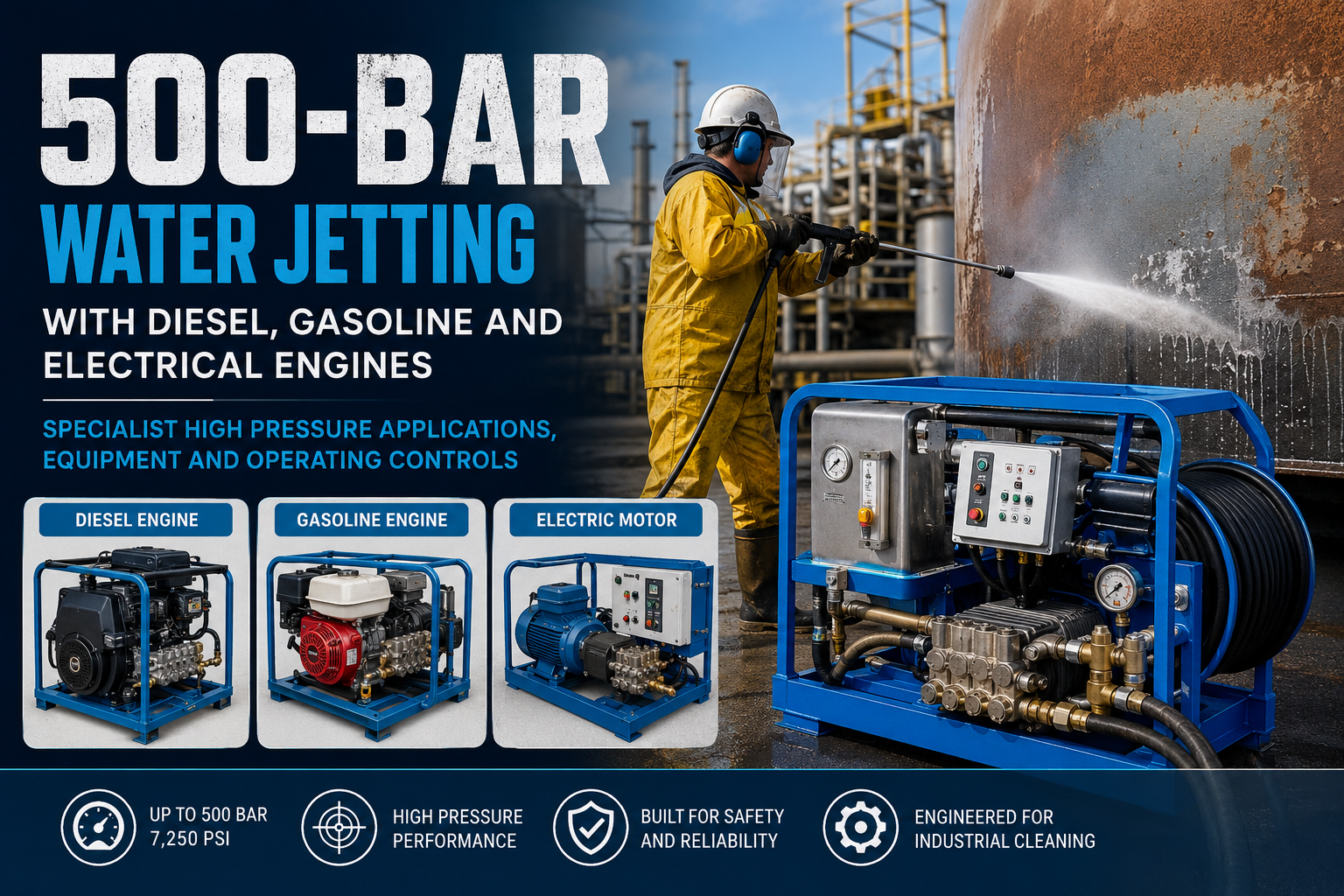
500 bar water jetting is a specialist high-pressure cleaning method used when standard pressure washing cannot provide enough cleaning power. At 500 bar, water reaches approximately 7,250 psi. This high pressure can remove tough deposits, coatings, rust, scale and contaminants from industrial surfaces and equipment.
However, 500-bar water jetting is not simply about increasing pump pressure. The complete system must match the application. The pump, engine or electric motor, high-pressure hose, valves, nozzle, controls and safety devices all work together. Depending on the work environment, a 500-bar water jetting system can use a diesel engine, gasoline engine or electric motor as its prime mover. Each option has different advantages for site access, operating time, power supply and mobility.
This article explains the main applications, equipment options and operating controls used with 500-bar water jetting systems.
What Is 500 Bar Water Jetting?
500-bar water jetting uses a high-pressure pump to deliver water at a working pressure of up to 500 bar. The pump converts mechanical power into high-pressure water flow. The combination of pressure and flow rate determines how the water jet performs. For example, pressure helps the jet break through or remove contamination, while flow helps carry loosened material away from the surface. Therefore, selecting a pump only by its maximum pressure may not provide the right solution.
A professional 500-bar system should be selected according to:
- Required pressure
- Required water flow
- Cleaning application
- Operating location
- Available power source
- Hose length
- Nozzle type
- Water supply
- Required operating time
- Safety requirements
Commercial 500-bar systems are available with electric and diesel drives, while specialist equipment can also be configured around other prime movers and site requirements.
Where Is 500 Bar Water Jetting Used?
500-bar water jetting is suitable for demanding industrial cleaning and surface preparation work.
➡️Industrial Cleaning
High-pressure water can remove dirt, oil deposits, scale and other contaminants from industrial equipment. Typical applications include:
- Industrial equipment cleaning
- Machinery cleaning
- Tank cleaning
- Vessel cleaning
- Heat exchanger cleaning
- Tube bundle cleaning
- Pipe cleaning
- Workshop cleaning
- Plant maintenance
The correct nozzle and flow rate are important because different surfaces require different jet patterns and cleaning methods.
➡️Surface Preparation
500-bar water jetting can also support surface preparation before maintenance or coating work. It can help remove:
- Loose coatings
- Rust
- Dirt
- Marine growth
- Surface contamination
- Deposits
Some systems can also use specialised accessories for abrasive water blasting or other surface preparation methods.
➡️Marine and Offshore Applications
Marine equipment often requires regular cleaning because of salt, corrosion, marine growth and heavy contamination. 500-bar water jetting can be used for:
- Ship cleaning
- Boat cleaning
- Deck cleaning
- Marine equipment cleaning
- Removal of marine growth
- Tank and container cleaning
- Maintenance activities
For offshore work, the equipment configuration must also consider the available power source, site restrictions and required safety controls.
➡️Pipe and Heat Exchanger Cleaning
Specialist nozzles and flexible lances can direct high-pressure water through pipes and tubes. This makes 500-bar equipment useful for:
- Heat exchanger tube cleaning
- Tube bundle cleaning
- Pipe cleaning
- Blockage removal
- Process equipment maintenance
Flexible lances and specialised tube-cleaning nozzles are commonly used for these applications.
Choosing the Right Drive: Diesel, Gasoline or Electric
One of the most important decisions is selecting the correct power source. A 500-bar pump requires sufficient mechanical power to maintain the required pressure and flow. The drive should therefore be selected according to the pump specification and application.
➡️Diesel-Driven 500 Bar Water Jetting
Diesel-driven systems are useful when the equipment must operate away from a reliable electrical supply. A diesel engine can provide an independent power source for the pump. This makes diesel-driven equipment suitable for many outdoor and mobile applications. Common uses include:
- Construction sites
- Remote industrial locations
- Marine applications
- Plant maintenance
- Outdoor cleaning
- Shutdown projects
- Mobile water jetting
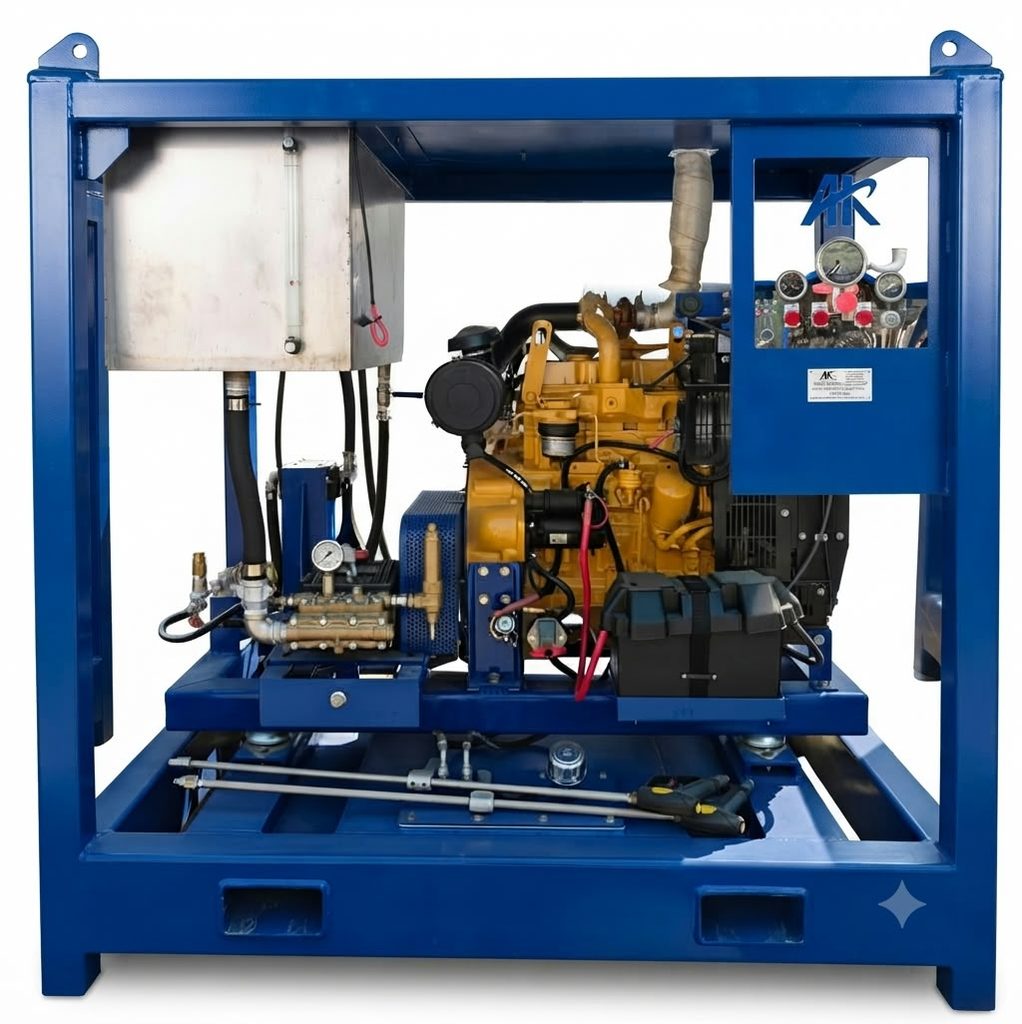
Diesel water jetting machines are available in compact and heavy-duty configurations. Some commercial 500-bar units also include water tanks, hose reels and integrated control systems for mobile operation. However, operators must consider fuel storage, exhaust emissions, ventilation and engine maintenance.
➡️Gasoline-Driven 500 Bar Water Jetting
Gasoline engines can be considered for portable applications where electrical power is not available. Their compact configuration can make them useful for certain mobile or temporary jobs. However, the engine must be correctly matched to the pump’s pressure and flow requirements. Gasoline-driven equipment should also be used with suitable ventilation and fuel-handling controls. For enclosed areas, combustion-engine equipment requires particular attention to exhaust gases and ventilation. In these situations, an electric motor may be more suitable when an appropriate electrical supply is available.
➡️Electric-Motor-Driven 500 Bar Water Jetting
Electric systems are useful where a suitable electrical supply is available. An electric motor can provide consistent power to the high-pressure pump without on-site combustion emissions from the drive. Electric 500-bar systems are commonly available for industrial cleaning applications. Commercial systems can include control panels, pressure adjustment, thermal protection and other operating controls.
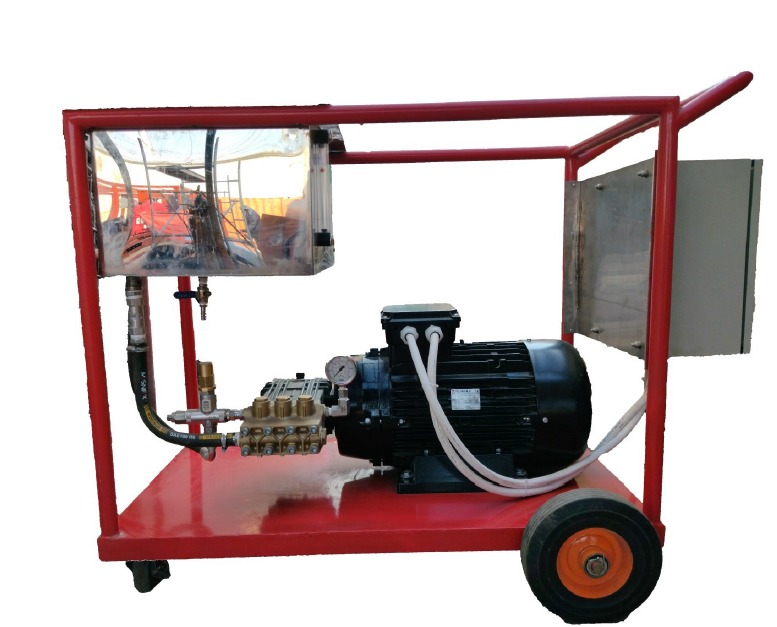
Electric systems can be particularly useful for:
- Workshops
- Manufacturing plants
- Factories
- Industrial facilities
- Indoor cleaning areas
- Plant maintenance
- Locations with reliable three-phase power
The electrical supply must match the motor and control-panel requirements of the equipment.
Main Components of a 500 Bar Water Jetting System
A complete water jetting package includes much more than a high-pressure pump.
1. High-Pressure Pump
The pump is the heart of the system. A positive-displacement plunger pump is commonly used for high-pressure water jetting. The pump must be selected according to the required pressure and flow. For a 500-bar application, all pressure-side components must be rated appropriately for the intended working pressure.
2. Prime Mover
The prime mover provides power to the pump. Depending on the application, this can be:
- Diesel engine
- Gasoline engine
- Electric motor
The prime mover must provide sufficient power for the selected pump operating point.
3. High-Pressure Hose
The high-pressure hose transfers water from the pump to the gun, lance or specialised tool. The hose must have a suitable working-pressure rating and must be inspected before use. Never use a hose simply because it physically fits the connection. Its pressure rating, condition, fittings and compatibility must be suitable for the complete system.
4. Pressure Gauge
A pressure gauge allows the operator to monitor system pressure. A clear pressure indication is important because the operator needs to know whether the system is operating within its intended pressure range. Some professional systems use pressure gauges with protection against pressure pulsations to improve measurement reliability.
5. Unloader Valve
The unloader valve is an important pressure-control device. When the spray gun is closed, the pump continues to produce flow. The unloader redirects water through a bypass path instead of allowing pressure to continue increasing at the outlet. This helps control pressure and protect the pump and other components.
6. Safety Valve
A safety or pressure-relief valve provides additional protection against excessive pressure. The valve should be correctly selected and set according to the system design and manufacturer’s requirements.
7. Nozzle or Jetting Tool
The nozzle controls how water leaves the system. Different nozzles can produce different spray patterns and cleaning results. Depending on the application, equipment may include:
- Fan jet nozzles
- Rotary nozzles
- Tube-cleaning nozzles
- Banshee-type nozzles
- Flexible lances
- Rigid lances
- Specialised cleaning tools
Therefore, the nozzle should be selected according to the surface, contamination and required cleaning method.
Operating Controls for 500 Bar Water Jetting
Operating controls are essential because high-pressure water can create serious hazards if the system is not controlled correctly.
➡️Pressure Control
The operator should be able to monitor and adjust pressure according to the job. The system should not automatically operate at maximum pressure for every application. Using only the pressure required for the task can help reduce unnecessary equipment stress and water consumption.
➡️Trigger or Dead-Man Control
The spray gun or jetting tool should provide positive control over water flow. When the operator releases the control, the water flow should stop or move into the appropriate safe operating mode according to the equipment design. This prevents the high-pressure jet from continuing uncontrolled when the operator releases the trigger.
➡️Emergency Stop
Powered equipment should have a clearly accessible emergency-stop function where required by the equipment design. Emergency controls should be tested as part of the equipment inspection and operating procedure.
➡️Low-Water Protection
The pump needs an adequate water supply. Low-water or dry-running protection can help protect the pump from damage. Some professional systems use inlet pressure or water-level monitoring for this purpose.
➡️Thermal Protection
Water temperature and pump operating conditions must remain within the manufacturer’s limits. Some water jetting systems use thermal protection to reduce the risk of overheating during operation.
How to Operate a 500 Bar Water Jetting System
A safe operating procedure should always follow the equipment manufacturer’s instructions and the site’s approved work procedure. A typical sequence includes the following steps.
➡️Step 1: Inspect the Equipment
Before starting, inspect:
- Pump
- Engine or electric motor
- Hoses
- Couplings
- Gun
- Lance
- Nozzle
- Pressure gauge
- Valves
- Safety devices
Do not operate equipment with damaged or unsuitable high-pressure components.
➡️Step 2: Check the Water Supply
Make sure the pump receives sufficient clean water. Check the inlet filter and supply hose. A restricted water supply can affect pump performance and may cause equipment damage.
➡️Step 3: Connect the High-Pressure Equipment
Connect the high-pressure hose, gun, lance and selected nozzle according to the manufacturer’s instructions. Make sure connections are secure before starting the pump.
➡️Step 4: Start at Low or Controlled Pressure
Start the equipment according to the manufacturer’s procedure. Allow air to leave the system before applying full operating pressure.
➡️Step 5: Increase to the Required Pressure
Adjust the pressure gradually. Do not automatically increase the system to 500 bar unless the application requires it and every component is rated for that operating condition.
➡️Step 6: Begin the Cleaning Work
Maintain a controlled distance from the surface. Move the jetting tool in a consistent pattern. Avoid unnecessary movement that could damage the surface or create uncontrolled splashback.
➡️Step 7: Stop and Depressurise Correctly
When the job is complete, stop the pump according to the manufacturer’s procedure. The system must be safely depressurised before disconnecting hoses, fittings or other components. Never loosen a high-pressure connection while the system may still contain pressure.
Safety Considerations for 500 Bar Water Jetting
500-bar water jetting requires trained operators and proper work controls. A high-pressure water jet can cause severe injury. Therefore, the work area should be controlled and unauthorised personnel should remain outside the designated exclusion zone.
Important controls include:
- Trained operators
- Correct personal protective equipment
- Pressure-rated hoses and fittings
- Hose restraints where required
- Proper nozzle selection
- Pressure relief protection
- Emergency stop controls
- Safe depressurisation
- Equipment inspection
- Controlled access to the work area
- Clear communication between workers
Safety controls should be selected according to the equipment, application and applicable site procedures. Industry guidance also highlights the importance of pressure relief, dead-man controls, hose management and exclusion zones for high-pressure water jetting.
500 Bar Water Jetting: Pressure Is Only One Part of the System
A successful water jetting system needs the right combination of pressure, flow, power and tooling. For example, increasing pressure does not automatically make a system better for every cleaning job. The required flow rate, nozzle design and surface condition also affect the result. Therefore, equipment selection should start with the application.
Ask:
- What material needs to be removed?
- What surface needs to be cleaned?
- What pressure is required?
- What flow rate is required?
- Is the work indoors or outdoors?
- Is electrical power available?
- Is a mobile system required?
- What nozzle or jetting tool is suitable?
- What safety controls are required?
- How will the equipment be transported and operated?
These questions help determine whether a diesel, gasoline or electric 500-bar water jetting system is appropriate.
Why Specialist Equipment Matters
At 500 bar, every component becomes important. The pump must deliver the required pressure and flow. The drive must provide enough power. The hose and fittings must be correctly rated. The nozzle must match the application. Finally, the control and safety system must allow the operator to manage the equipment correctly.
For this reason, professional water jetting equipment should be configured around the actual application instead of selecting a machine only by its maximum pressure. A properly configured package can provide a practical solution for industrial cleaning, surface preparation, tube cleaning, marine maintenance and other demanding applications.
Conclusion
500-bar water jetting UDOR pump provides a powerful solution for specialist industrial cleaning and maintenance applications. However, effective water jetting depends on more than high pressure. The correct pump, flow rate, drive system, hose, nozzle and operating controls must work together.
Diesel-driven systems can provide independent power for mobile and outdoor work. Gasoline-driven systems can suit selected portable applications where their use is appropriate. Electric-motor-driven systems can provide a practical solution where reliable electrical power is available.
Most importantly, every 500-bar water jetting system should be selected, operated and maintained according to the manufacturer’s requirements and the conditions of the job. With the right equipment and proper operating controls, high-pressure water jetting can support demanding industrial cleaning and maintenance work while providing controlled and repeatable performance.