✉️ [email protected] | 📞 +971-4-2675252

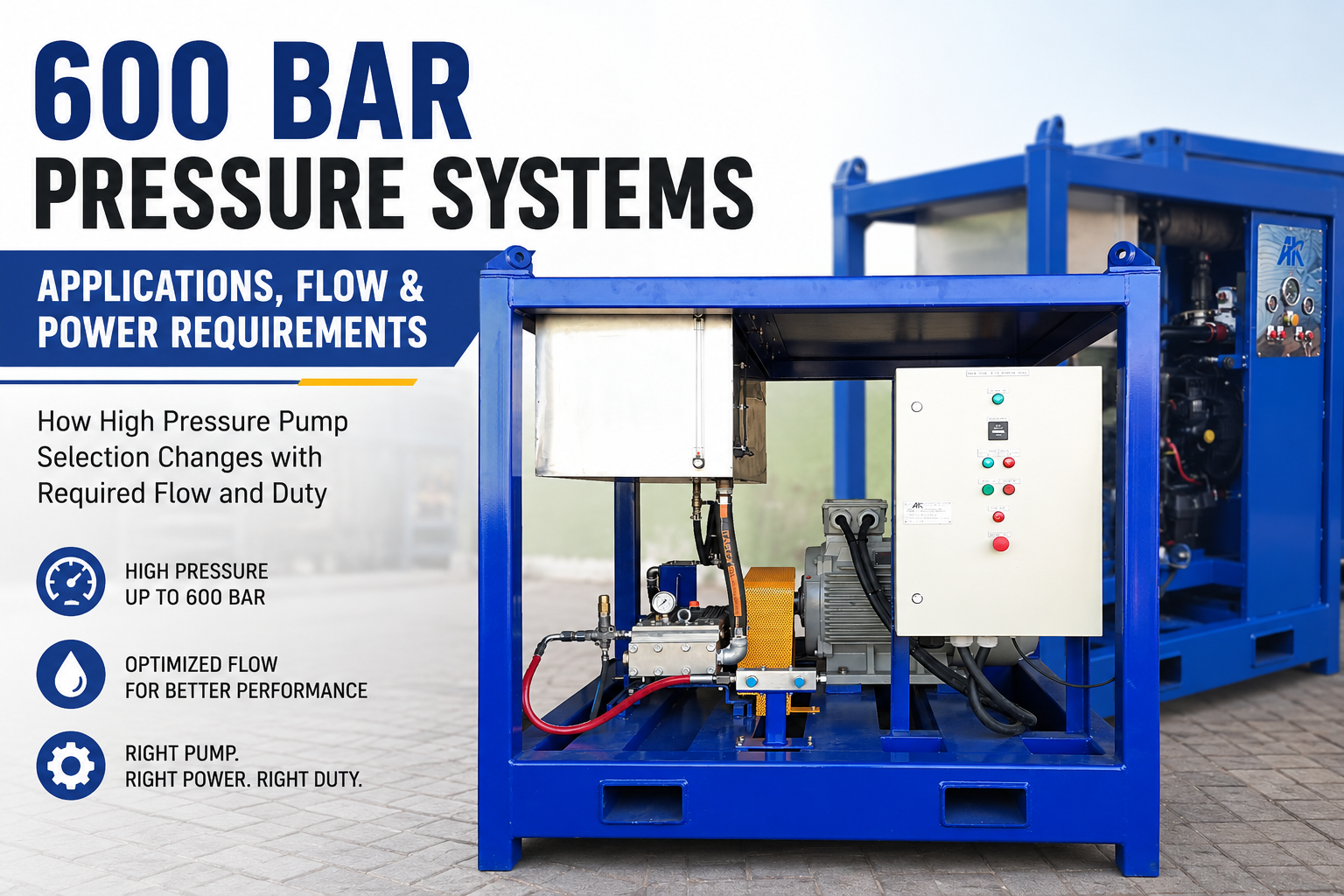

High-pressure cleaning and water jetting often require more than standard pressure washing equipment. For demanding industrial work, 600 bar pressure systems can deliver the pressure needed to remove tough dirt, scale, coatings, corrosion, grease, and other deposits.
However, pressure is only one part of the system. Flow rate, pump type, power source, nozzle size, and duty also affect performance. Therefore, you should select the pump based on the complete job requirement. A 600 bar system for low-flow cleaning can have very different pump and power needs from a system for high-flow industrial water jetting.
In this guide, we explain how 600 bar pressure systems work, where they are used, and how flow and power affect pump selection.
What Are 600 Bar Pressure Systems?
A 600 bar pressure system is a high-pressure pumping system that can deliver pressure up to 600 bar within its rated operating range.
A typical system can include:
- High-pressure pump
- Diesel, gasoline, or electric engine
- Pressure regulator
- Unloader valve
- High-pressure hose
- Valves and fittings
- Pressure gauge
- Spray gun or jetting tool
- High-pressure nozzles
- Safety controls
Each part must match the required pressure and flow. For example, a hose rated for a lower pressure should not connect to a 600 bar system. Instead, select every component according to the manufacturer’s pressure rating. As a result, the pump, power source, hose, valves, and nozzle should work together as one complete system.
Where Are 600 Bar Systems Used?
600 bar pressure systems can support many demanding industrial applications. However, the correct pressure and flow depend on the specific job.
➡️Industrial Cleaning
Industrial facilities often deal with heavy dirt, grease, oil, scale, and process deposits. A high-pressure water jet can help remove these materials from suitable surfaces.
Typical cleaning work includes:
- Heavy equipment cleaning
- Industrial surface cleaning
- Oil and grease removal
- Scale removal
- Concrete residue removal
- Process equipment cleaning
- Maintenance cleaning
The operator should always select the pressure and flow according to the surface and deposit.
➡️Surface Preparation
High-pressure water can also help prepare surfaces before maintenance or coating work. For example, operators can use water jetting to remove old coatings, dirt, and surface deposits. However, more pressure does not always produce better results. The operator should choose the pressure, flow, nozzle, and working distance for the material being cleaned.
➡️Tube and Heat Exchanger Cleaning
Many industrial plants need regular tube and heat exchanger cleaning. In these applications, the pump must provide enough pressure and flow for the selected cleaning tool. Therefore, the pump should match the tube size, cleaning tool, and required water flow.
➡️Pipeline and Maintenance Work
Some pipeline and industrial maintenance tasks also require high-pressure water. The required pump depends on the cleaning method, pipe size, deposit type, and target flow. For that reason, operators should define the complete duty before choosing a 600 bar pump.
Why Flow Rate Matters
Pressure tells you how much force the water can produce. Flow rate tells you how much water the pump delivers. Flow rate normally uses litres per minute (L/min) as its unit. Some larger systems use cubic metres per hour (m³/hr).
Consider two pumps:
- 600 bar at 10 L/min
- 600 bar at 40 L/min
Both pumps can reach 600 bar. However, the second pump delivers four times more water. Therefore, the two systems have very different power requirements. The higher-flow system can move more water across the surface. However, it also needs more input power. This is why you should never select a pump based on pressure alone.
How Pressure and Flow Affect Pump Selection
The required duty directly affects pump selection.
Before selecting a 600 bar pump, check these points:
- Required pressure
- Required flow
- Application
- Operating time
- Power source
- Nozzle or cleaning tool
- Water quality
- Installation conditions
➡️First, determine the pressure that the job needs.
➡️Next, determine the required flow rate.
➡️Then, check how long the system will run and which power source you can use.
➡️Finally, match the pump with the nozzle, hose, valves, and other equipment.
This approach helps you choose a complete system instead of choosing a pump based only on its maximum pressure.
Understanding 600 Bar Power Requirements
Power is another key factor when selecting a 600 bar pressure system. Pump power depends mainly on pressure and flow. As pressure increases, power demand increases. Likewise, higher flow also increases power demand.
A simple hydraulic power calculation is:
Hydraulic Power (kW) ≈ Pressure (bar) × Flow (L/min) ÷ 600
For example, consider a pump operating at 600 bar and 20 L/min:
600 × 20 ÷ 600 = 20 kW
The pump still needs more input power because the pump and drive system have efficiency losses. Therefore, you should not select an engine or motor using the hydraulic power figure alone. Instead, allow for the efficiency of the complete drive system and follow the pump manufacturer’s recommendations.
Diesel, Gasoline and Electric Power Options
A 600 bar pressure system can use different power sources. The right choice depends on the work location and operating requirements.
➡️Diesel-Driven Systems
Diesel engines can work well for mobile industrial applications. For example, diesel-driven systems can support:
- Pipeline maintenance
- Construction work
- Industrial cleaning
- Remote work sites
- Heavy-duty water jetting
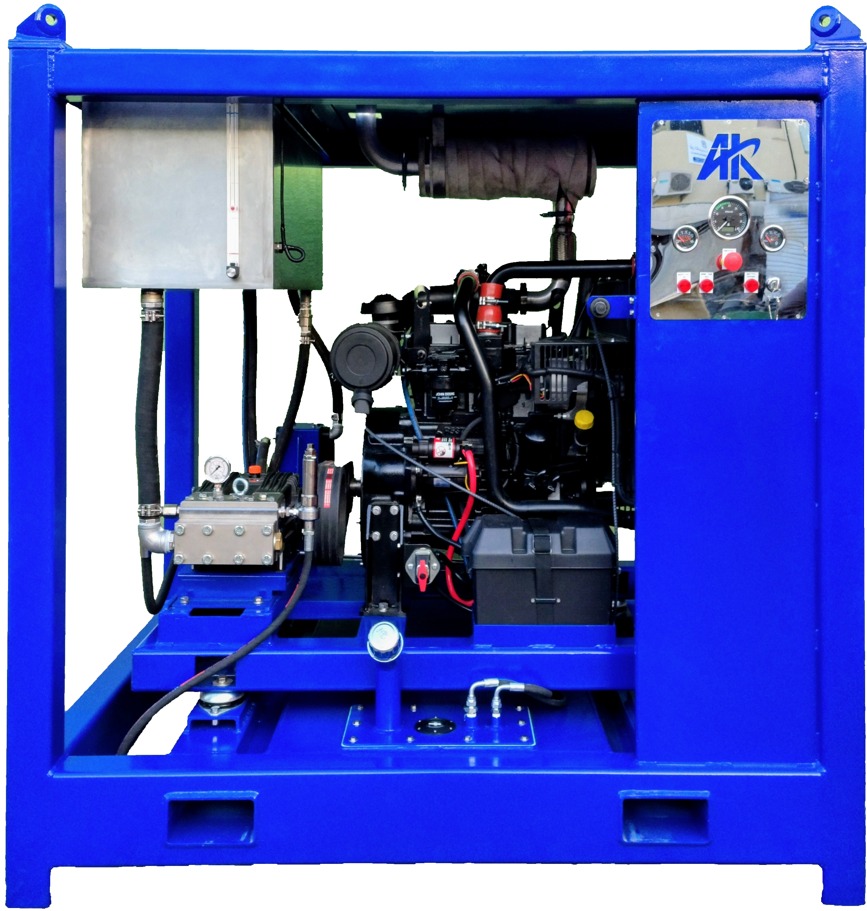
A skid-mounted package can also make transportation and installation easier.
➡️Gasoline-Driven Systems
Gasoline engines can provide a compact option for portable equipment. They can suit applications where operators need to move the system between different work areas. However, the engine must still provide enough power for the selected pump duty.
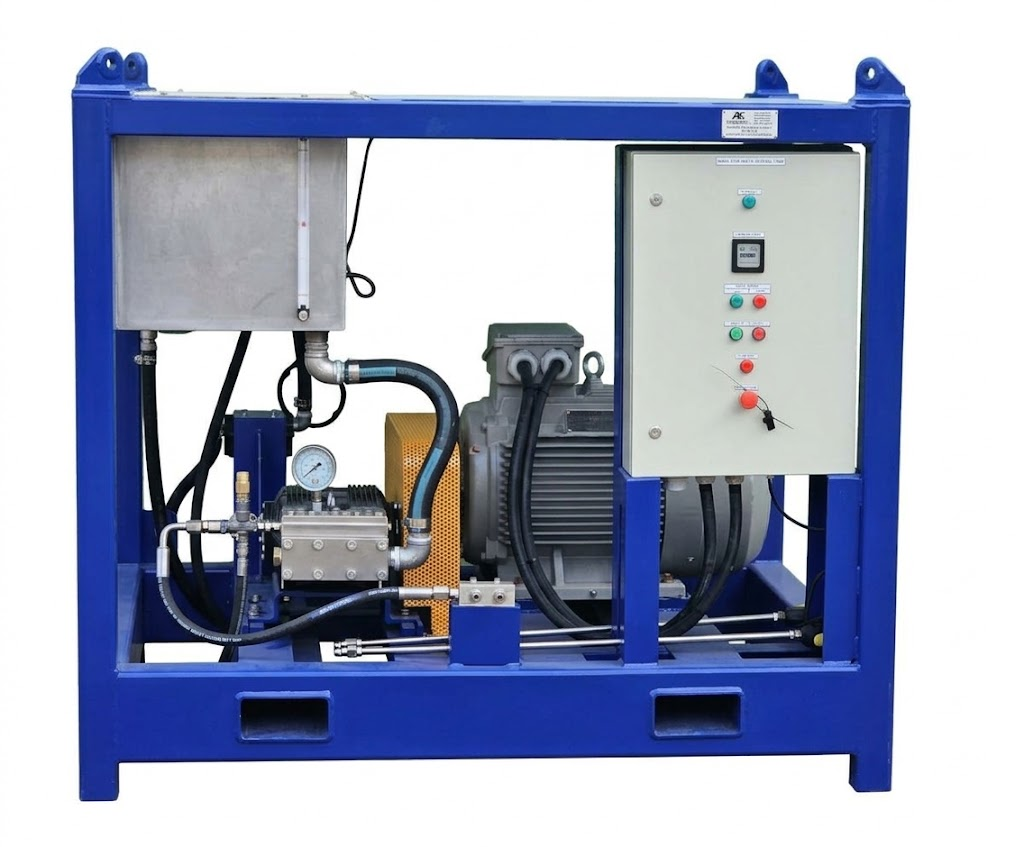
➡️Electric-Driven Systems
Electric motors can suit factories, workshops, and other sites with a suitable electrical supply. They can provide steady power for fixed cleaning systems. Before selecting an electric motor, check the required voltage, phase, motor power, and pump duty.
Choosing the Right Pump for the Duty
Not every 600 bar application needs the same pump. For example, a pump for short cleaning jobs may have different requirements from a pump that runs for several hours each day. Therefore, consider the following factors.
1. Required Pressure
Start by identifying the pressure that the application needs. Do not select 600 bar simply because the equipment can reach that pressure. Instead, select the pressure according to the cleaning task and equipment requirements. Also, consider pressure losses through hoses, pipes, valves, and other parts of the system.
2. Required Flow
Next, determine the flow that the cleaning tool needs. A higher flow can help improve cleaning speed in some applications. However, higher flow also increases water use and power demand. Therefore, select the flow based on the actual job.
3. Duty Cycle
Consider how long the pump will operate. Will the system run for a few minutes at a time? Or will it run for several hours? A system used for long operating periods needs suitable pump cooling, lubrication, engine or motor capacity, and maintenance support.
4. Power Source
Choose the power source according to the work environment. For mobile jobs, a diesel or gasoline engine may provide the required flexibility. For fixed industrial locations, an electric motor may provide a practical option.
5. Nozzle and Cleaning Tool
The nozzle must match the pump’s pressure and flow. For example, changing the nozzle size can change the system’s operating conditions. Therefore, select the pump, nozzle, hose, and cleaning tool as a complete package.
Why Pressure Ratings Matter
At 600 bar, component selection becomes especially important. Every high-pressure component must have a suitable pressure rating.
Check the rating of:
- High-pressure hoses
- Pipes
- Valves
- Fittings
- Spray guns
- Nozzles
- Pressure gauges
- Unloader valves
- Connections
Never assume that a component is suitable simply because it looks strong. Instead, check the manufacturer’s specifications before using it. In addition, inspect high-pressure components regularly and replace damaged parts before operation.
Does Higher Pressure Always Mean Better Cleaning?
Higher pressure does not always mean better cleaning. Cleaning performance depends on several factors:
Pressure + Flow + Nozzle + Distance + Cleaning Method
For example, one application may need higher pressure with lower flow. Another job may need more water flow to remove material faster. The nozzle also affects how the water reaches the surface. Therefore, operators should select the complete system according to the cleaning requirement.
How Nozzle Selection Affects Performance
The nozzle controls how the pump’s water flow reaches the surface. Different nozzles create different spray patterns and water impact. When selecting a nozzle, consider:
- Pump pressure
- Pump flow
- Cleaning tool
- Surface type
- Spray pattern
- Working distance
A nozzle that does not match the pump can affect pressure, flow, and cleaning performance. For this reason, nozzle selection should form part of the complete pump selection process.
How to Select a 600 Bar System
Before choosing a 600 bar pressure system, answer a few simple questions.
➡️What pressure does the job need?
First, identify the required working pressure.
➡️What flow does the job need?
Next, identify the required L/min.
➡️How long will the system run?
Then, define the operating cycle.
➡️What power source is available?
After that, select diesel, gasoline, or electric drive.
➡️What cleaning tool will you use?
Finally, check the nozzle, hose, gun, and other accessories. Once you know these requirements, you can select a pump that matches the complete duty.
Benefits of a Correctly Matched 600 Bar System
A correctly selected system can provide:
- Consistent cleaning performance
- Suitable water flow
- Better pump utilization
- Appropriate power use
- Compatible components
- Reliable operation
- Better suitability for heavy-duty work
Most importantly, matching pressure and flow helps the pump deliver the performance that the application requires.
Final Thoughts
600 bar pressure systems can support demanding industrial cleaning and water jetting applications. However, pressure alone does not determine system performance. Instead, you should consider pressure, flow, power, duty cycle, nozzle selection, and component ratings together.
A low-flow 600 bar pump can have very different power requirements from a high-flow 600 bar pump. Therefore, define the complete operating duty before selecting the pump and power source. With the right combination of pressure and flow, a 600 bar system can provide the performance required for demanding cleaning and maintenance work.