✉️ [email protected] | 📞 +971-4-2675252

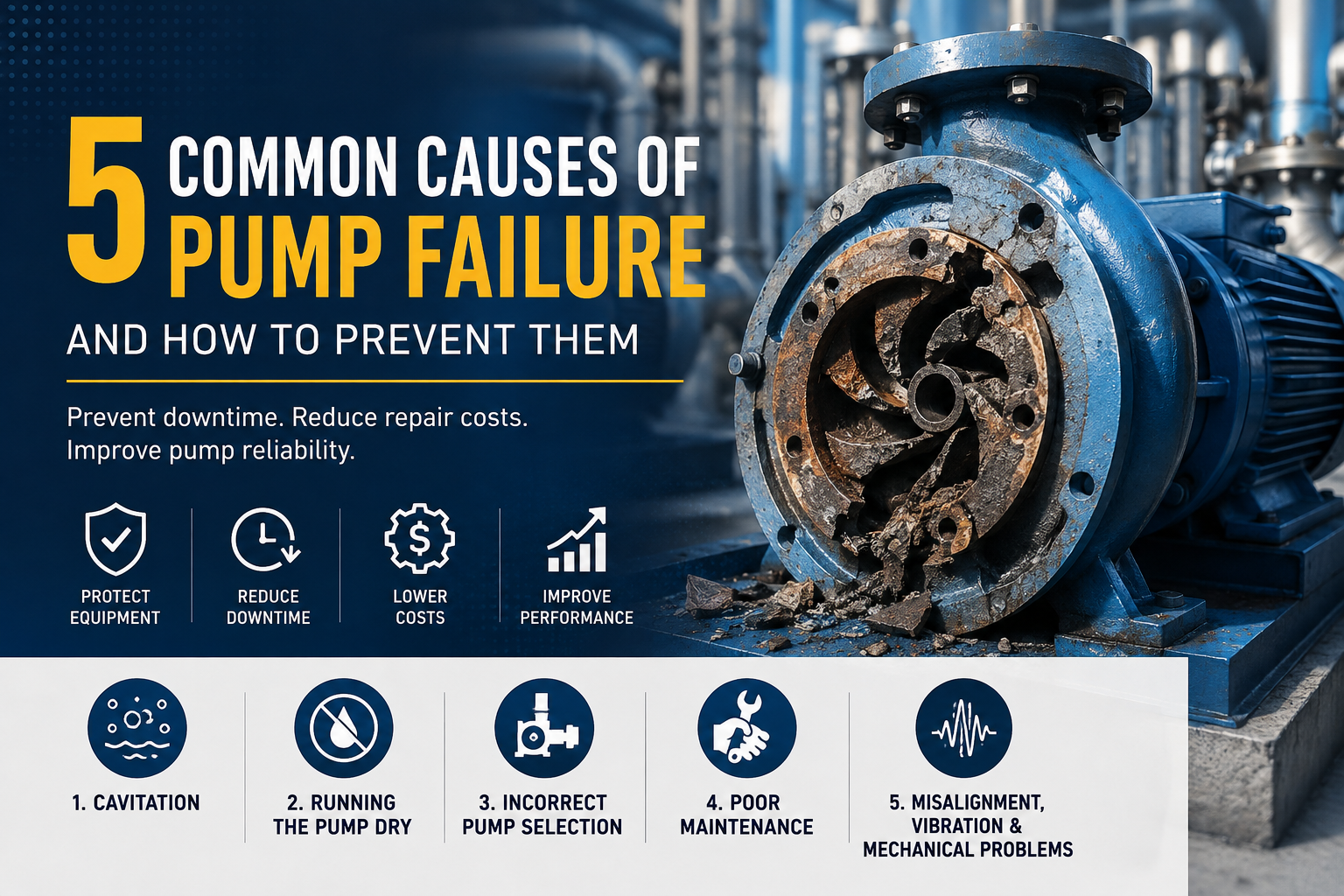

Pumps play an important role in many industrial operations. They move water, chemicals, fuel, and other fluids through pipelines and equipment. However, pump failure can cause unexpected downtime, repair costs, production delays, and safety risks.
Fortunately, many pump problems can be prevented. Proper pump selection, installation, operation, and maintenance can help improve reliability and extend pump service life. In this article, we explain 5 common causes of pump failure and how you can prevent them.
1. Cavitation
Cavitation is one of the most common causes of pump damage. It occurs when the pressure at the pump suction falls too low. As a result, vapor bubbles form inside the fluid. When these bubbles enter a higher-pressure area, they collapse quickly. This process can create shock waves that damage the pump’s internal components.
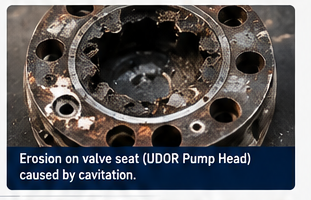
Common signs of cavitation
You may notice several signs when a pump experiences cavitation:
- Unusual noise or vibration
- Reduced pump performance
- Fluctuating flow or pressure
- Damage to the impeller or other internal parts
- Increased wear on pump components
How to prevent cavitation
You can reduce the risk of cavitation by taking several steps:
- Make sure the pump has sufficient suction pressure.
- Select the correct suction pipe size.
- Keep the suction line as short and straight as practical.
- Avoid unnecessary restrictions and sharp bends.
- Keep suction valves fully open during normal operation.
- Check strainers and filters regularly for blockage.
- Select a pump with suitable NPSH requirements for the application.
Most importantly, check the available suction conditions before selecting the pump. This helps ensure that the pump can operate safely under the expected conditions.
2. Running the Pump Dry
Pumps need the correct amount of fluid to operate properly. Therefore, running a pump without enough fluid can cause serious damage. Some pumps use the pumped fluid for lubrication or cooling. When the fluid level becomes too low, internal components can overheat and wear quickly.
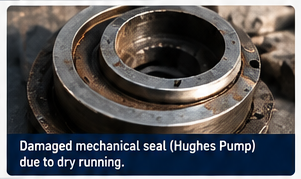
What happens when a pump runs dry?
Dry running can lead to:
- Seal damage
- Excessive heat
- Bearing damage
- Internal wear
- Reduced pump service life
- Complete pump failure
For example, a damaged mechanical seal can cause leakage and allow the problem to develop further.
How to prevent dry running
You can reduce the risk of dry running by following these practices:
- Check the fluid level before starting the pump.
- Prime the pump and suction line when required.
- Install low-level or low-pressure protection where appropriate.
- Check the suction valves before starting.
- Monitor the pump during startup.
- Follow the pump manufacturer’s operating instructions.
In addition, automated systems can use suitable protection devices to stop the pump when unsafe operating conditions occur.
3. Incorrect Pump Selection
Incorrect pump selection can also cause premature failure. A pump should not be selected based only on pressure or flow rate. Instead, you should consider the complete application.
For example, the pump must match the required flow, pressure, fluid type, temperature, suction conditions, operating hours, and system requirements.
A pump that is too small may not provide the required performance. On the other hand, an oversized pump may operate inefficiently or outside its recommended operating range.
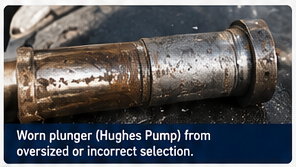
Factors to consider when selecting a pump
Before selecting a pump, check the following factors:
- Required flow rate
- Required discharge pressure
- Fluid type
- Fluid temperature
- Fluid viscosity
- Suction conditions
- Operating hours
- Power source
- Duty cycle
- Installation environment
For centrifugal pumps, you should also check the pump performance curve. The curve helps you understand the relationship between flow, head, efficiency, and power. For high-pressure applications, consider the complete pump system. The pump, driver, valves, piping, gauges, and other components should work together within their rated operating conditions.
4. Poor Maintenance
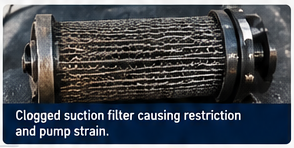
Even a correctly selected pump can develop problems when maintenance is neglected. Over time, seals, bearings, valves, packing, hoses, and other components can wear. In addition, dirt and contamination can reduce pump performance. Small problems can also become major failures when operators do not identify them early.
How to prevent maintenance-related failures
A preventive maintenance program should include regular inspections of:
- Pump vibration
- Bearing condition
- Lubrication
- Mechanical seals
- Packing
- Valves
- Hoses and connections
- Couplings
- Filters and strainers
- Pressure and flow readings
- Motor or engine condition
Furthermore, record important operating conditions and maintenance activities. These records can help you identify changes in pump performance over time.
As a result, your maintenance team can investigate problems before they cause an unexpected shutdown.
5. Misalignment, Vibration, and Mechanical Problems
Mechanical problems can also lead to pump failure. For example, incorrect alignment between the pump and driver can place additional loads on bearings, couplings, and shafts.
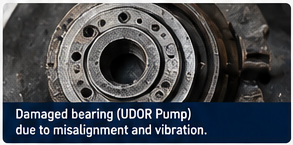
Excessive vibration can also indicate an underlying problem. Common causes include:
- Shaft misalignment
- Worn bearings
- Imbalance
- Loose mounting
- Damaged coupling
- Cavitation
- Operation outside the recommended range
How to prevent mechanical failures
You can reduce mechanical problems by following a regular inspection routine:
- Check pump and driver alignment during installation.
- Inspect couplings regularly.
- Make sure the pump has secure mounting.
- Monitor vibration during operation.
- Check bearings and lubrication.
- Investigate unusual noise or vibration immediately.
- Keep the pump within its recommended operating range.
Therefore, do not ignore a sudden change in vibration or noise. Early investigation can prevent a small mechanical problem from becoming a major pump failure.
Why Proper Pump Selection Matters
Pump reliability starts with proper selection. Before purchasing or installing a pump, review the actual operating requirements of the system.
For example, consider the required flow rate, pressure, fluid characteristics, suction conditions, power requirements, and operating environment.
In demanding applications, a custom pump package can provide a suitable solution. Instead of selecting a pump separately, you can configure the complete package according to the application’s requirements.
Depending on the application, a pump package can include:
- Pump
- Diesel engine or electric motor
- Skid
- Control system
- Valves
- Pressure gauges
- Protection devices
- Piping and connections
As a result, the complete package can work as one system and meet the required operating conditions.
Simple Pump Maintenance Checklist
Regular inspections can help identify potential problems before they lead to costly failures.
| Check | What to Look For |
|---|---|
| Pressure | Unexpected pressure changes |
| Flow | Reduced or unstable flow |
| Vibration | Unusual or excessive vibration |
| Noise | Cavitation, bearing, or mechanical noise |
| Seals | Leakage or visible damage |
| Bearings | Heat, noise, or wear |
| Valves | Leakage, blockage, or incorrect position |
| Suction line | Restrictions or blockage |
| Lubrication | Correct level and condition |
| Driver | Abnormal temperature, noise, or performance |
However, inspection frequency should depend on the pump type, operating conditions, manufacturer recommendations, and application.
Conclusion
Pump failure can result from several different problems. However, many failures can be prevented with proper selection, installation, operation, and maintenance.
The 5 common causes of pump failure discussed in this article are:
- Cavitation
- Running the pump dry
- Incorrect pump selection
- Poor maintenance
- Misalignment, vibration, and mechanical problems
Regular monitoring can help you identify problems early. In addition, preventive maintenance can reduce unexpected downtime and help extend pump service life.
Finally, choosing the correct pump and configuring the complete pump package according to the required flow, pressure, power source, and operating conditions can improve system reliability.
Al Khamis Equipment LLC provides pump equipment and customized pump package solutions for industrial and high-pressure applications. Our team can configure pump packages according to project requirements and operating conditions.