✉️ [email protected] | 📞 +971-4-2675252

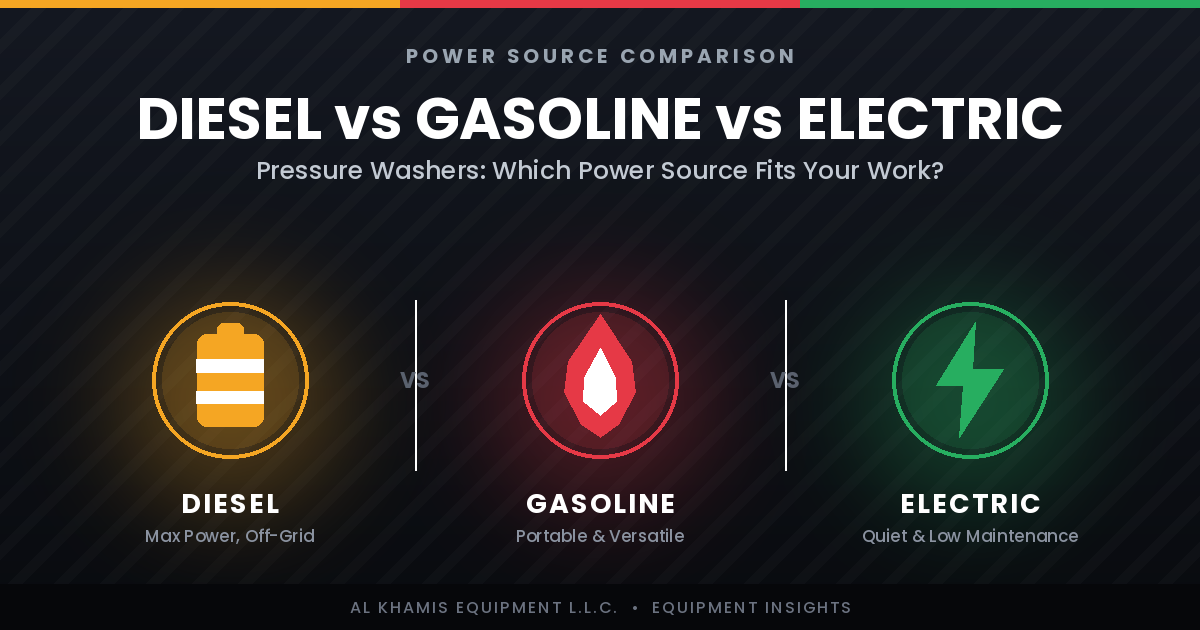

Diesel vs gasoline vs electric pressure washers differ in mobility, power supply, and where they can operate. Diesel and gasoline models suit many outdoor jobs, while electric models work well near a suitable outlet. This guide compares the three power sources so you can choose a pressure washer that fits your work.
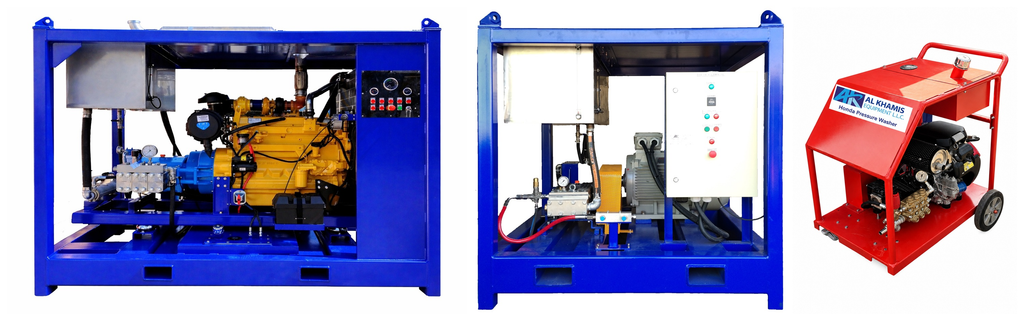
Diesel vs gasoline vs electric pressure washers: quick comparison
| Power source | Mobility | Power supply | Typical use |
|---|---|---|---|
| Diesel | Good for outdoor and remote sites; often heavier | Diesel fuel | Extended, demanding outdoor work |
| Gasoline | Good for mobile outdoor jobs | Gasoline | Flexible cleaning across multiple locations |
| Electric | Best near a suitable outlet | Mains electricity | Indoor, fixed-site, or noise-sensitive work |
Performance varies by model. Compare pressure, water flow, duty cycle, and the manufacturer’s operating instructions before choosing.
Diesel pressure washers: for demanding outdoor work
Diesel pressure washers suit jobs that need strong cleaning performance over long periods. They can operate at remote sites where mains electricity is unavailable, as long as you can bring fuel and water.
They are often used for heavy equipment, construction sites, agricultural work, and other large outdoor cleaning tasks. For extended operation, check the model’s duty cycle and service requirements.
However, diesel units can be heavy and produce exhaust. Use them outdoors or in a properly ventilated area, and account for fuel storage, maintenance, transport, noise, and local emissions rules.
Choose diesel if: your work is demanding, mainly outdoors, and far from reliable electrical power.
Gasoline pressure washers: mobile and versatile
Gasoline pressure washers offer mobility without a mains connection. They suit outdoor jobs that move between locations, such as fleet cleaning, property maintenance, and general site work.
Models vary in size and cleaning output, so match the washer’s pressure and water flow to the surfaces and soil you need to clean. Also consider how often you will transport and service the machine.
Like diesel units, gasoline pressure washers produce exhaust. They need outdoor use or proper ventilation, plus fuel handling and engine maintenance.
Choose gasoline if: you need a flexible machine for mobile outdoor cleaning.
Electric pressure washers: for indoor and fixed-site use
Electric pressure washers are a practical choice when the job is close to a suitable outlet. They produce no exhaust at the point of use and are often quieter than engine-powered models.
That makes them useful in workshops, garages, wash bays, and other fixed locations. Make sure the electrical supply meets the machine’s requirements, especially in wet work areas. The cord and outlet location will also limit how far you can move.
For remote sites without suitable power, an electric model may require a generator. This adds equipment and setup time.
Choose electric if: you work near a suitable outlet, especially indoors or where noise matters.
How to choose the right pressure washer power source
Consider the operating environment
For enclosed spaces, avoid engine-powered washers because of exhaust. An electric model may be more suitable if the site has an appropriate electrical setup.
For open outdoor areas, gasoline and diesel models provide more freedom from outlets. On remote sites, plan how you will transport the washer, fuel, and water.
Check how much mobility you need
Think about the full setup, including the machine, hoses, fuel, and water supply. Electric models work best when the outlet is close. Gasoline and diesel models can move farther from a building, but still need fuel and water.
Match cleaning performance to the job
Do not choose by power source alone. Compare pressure and water flow with the surface and level of dirt. Delicate materials may need lower pressure or a different nozzle.
For frequent, heavy-duty work, choose a model designed for extended operation. For occasional cleaning, a smaller unit may be easier to transport and maintain.
Plan for power, fuel, and maintenance
Diesel and gasoline models need fuel and engine servicing. Electric models need a suitable outlet and, in some cases, a generator. Also consider noise limits, running costs, and local rules.
For more help, see our guide to choosing the right pressure washer and explore our pressure washer range.
Which pressure washer power source fits your work?
Choose diesel for demanding outdoor work that may run for extended periods. Choose gasoline for mobile outdoor cleaning across multiple locations. Choose electric for indoor or fixed-site work near a suitable outlet.
Before you buy, compare pressure, water flow, duty cycle, and setup needs against your actual jobs. If you are unsure, contact our team to discuss the surfaces you clean, how often you work, and where you use the machine.